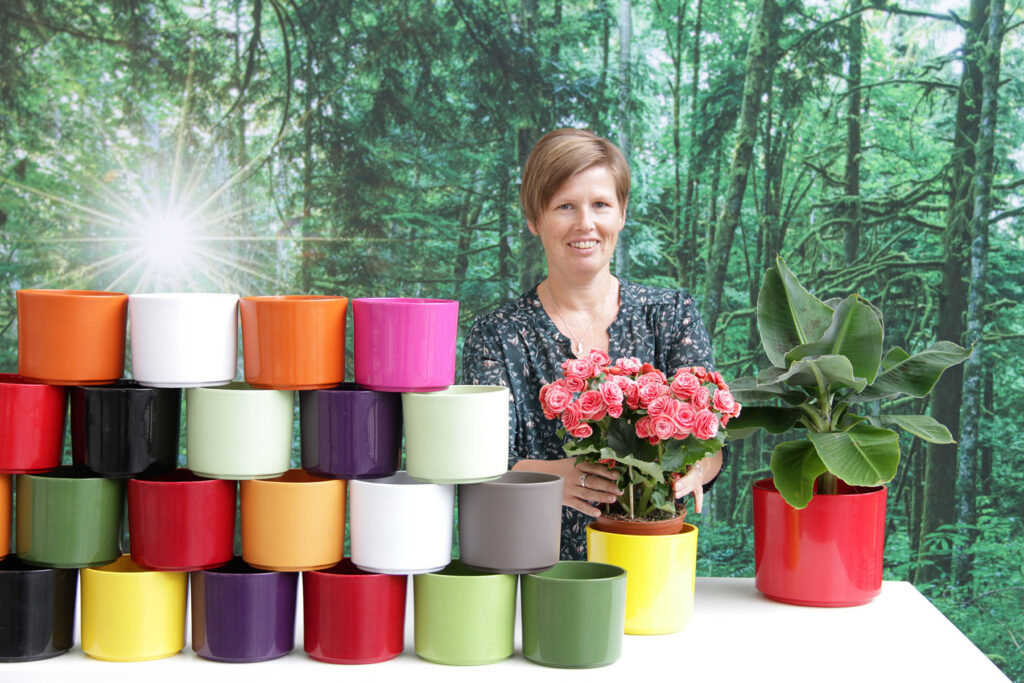
Employee in the spotlight: Sabrina Celie
What was once a purely functional garden has gradually evolved into a place with more colour, life and experience. Through conscious choices and a lot of experimentation, a garden has been created that changes with the seasons, leaves room for nature and brings peace and inspiration every day.
My garden journey to enjoying four seasons
For twenty years, my garden was mainly functional: a hedge, a few shrubs and a large patch of grass. That lawn turned out to be my biggest frustration for years. On the poor sandy soil, it was a constant struggle to keep it nice and green. Liming, fertilising, scarifying, mowing… I tried everything, but the desired result remained elusive.
The real turning point came during an open garden day at Voedselbos Den Zoeten Hof in Destelbergen. There I saw how a former horse pasture had been transformed in just a few years into a rich food forest full of trees, shrubs and flowers. Grass had made way for colourful flower beds, laid out using the no-dig method. That visit got me thinking: why keep fighting against a dry lawn when the children hardly play on it anymore? I decided to sacrifice a large patch of grass and make room for flowers.
Inspiration and first steps
From that moment on, I became increasingly interested in gardening. BBC’s Gardeners’ World became a regular source of inspiration. A report on a garden by Piet Oudolf convinced me completely. His vision of perennials and ornamental grasses – and especially the idea that a garden can also be attractive in winter – appealed to me enormously. In 2023, the first part of the lawn made way for perennials and grasses.
“This way, I can truly enjoy my garden all year round.”
But it didn’t stop there. An episode about annuals piqued my interest. I had never been a big fan of classic bedding plants in pots (too much watering), but annuals turned out to be surprisingly versatile. By sowing your own seeds, you can significantly extend your gardening year. During the winter months, when there is little going on outside, the gardening fun begins indoors. Choosing seeds, making plans and pre-sowing not only gives you something to look forward to, but also a sense of creativity and control. By pre-sowing in February or March, you start the spring with a clear head start. Another piece of lawn disappeared, but the floral splendour of Cosmos ‘Apricotta’ and Zinnia ‘Zinderella Elegans’ more than made up for it.
My latest discovery: dahlias
I used to think dahlias were a bit old-fashioned, but today they are back in vogue. The range is enormous: from soft pastel shades to striking eye-catchers, in countless shapes and textures. My collection has grown considerably over the past year, and I have new varieties on my wish list for the coming season.
What makes dahlias extra special is their long flowering period. They provide colour until the first frost and are also excellent as cut flowers. This means I can enjoy their beauty not only outdoors, but also indoors. In winter, I dig the tubers out of the ground and let them overwinter in the garage. In spring, I pot them up and start them off. This gives them a clear head start when planting out after the frosts: less chance of slug damage and earlier flowering.

The result? Pure floral splendor
I don’t regret it for a second. From the living room and kitchen, I look out on a lively and changing garden scene every season. In spring, the spring bulbs appear, and from May to November, perennials, ornamental grasses, dahlias and annuals take over. And best of all, almost every week I can harvest flowers for bouquets, for myself or to give as gifts. This year, I also dried a lot of flowers to use creatively in winter. This way, I really enjoy my garden for four seasons.
Ecological gardening: space for life
I try to garden ecologically as much as possible. I no longer use chemical pesticides, and the garden doesn’t have to be perfectly tidy. Dead plant material provides shelter for animals and nourishes the soil at the same time. It’s amazing to see how nature finds its own way. In the wet spring of 2023, I discovered a frog in the flower bed, and in the evenings, a hedgehog sometimes parades through the garden.
“The garden doesn’t have to be perfectly tidy; dead plant material nourishes the soil and provides space for life.”
Birds also feel at home here. Sparrows, blackbirds, wood pigeons, turtle doves, thrushes and starlings are regular visitors. In winter, great tits, blue tits and robins join them. They like to help themselves to the grains from our chickens, and on cold days, there are feeding stations in various places.
The tips that transformed my garden
- Start small: begin with one flower bed and a small patch of lawn to experiment without pressure.
- Choose strong perennials: species such as Persicaria, Echinacea and ornamental grasses form a low-maintenance basis.
- Play with annuals: pre-sowing in March or April ensures an early start and lots of colour.
- Think about winter: leave dead plants in place for structure and insects.
- Garden ecologically: avoid pesticides and leave leaves and branches on the ground for lively soil.
- Attract animals: feeding stations in winter and a water bowl in summer make all the difference.
- Dry flowers: ideal for creative projects in winter.
- Extend your gardening year: ordering seeds in winter provides anticipation and a flying start.
My garden, my inspiration
My garden is my personal oasis. After a day behind the computer, I find peace and new energy there. Being physically active, breathing in the scent of earth, getting my hands dirty and observing life among the plants: it helps me clear my head. Putting together bouquets and drying flowers to use creatively later on adds an extra dimension. This makes my garden a place I enjoy all year round – as a place to relax and as an inexhaustible source of inspiration.